In the world of token-hungry and costly AI models, DeepSeek has always provided a sigh of relief. I got introduced to DeepSeek models when R1 was available in private preview of Snowflake Cortex, and the Snowflake team was kind enough to get it enabled for our team. It was free back then for a limited time, but even the paid API was way more affordable back then. The same philosophy has carried to the v4. Though non-reasoning, it's highly capable. I was impressed back then, I am impressed still.
Addressing the elephant in the room, DeepSeek v4 Flash is by far the most value-for-money model I've ever used. It is very capable, better than Gemini 3.5 Flash in most tasks (conditions apply—I'll cover this later). And the price is just insanely affordable. But it's the pro version that has been my daily driver for the last 2 months.
Price
At launch in April 2026, V4 Pro was priced at $1.74/M input and $3.48/M output, and V4 Flash at $0.14/M input and $0.28/M output — with a 75% launch promo that brought Pro down to $0.435/$0.87 right out of the gate. That promo was made permanent in late May, so those are the off-peak rates now. With the official V4 release in mid-July, DeepSeek introduced peak-valley pricing — during peak hours (6:30-9:30 AM and 11:30 AM-3:30 PM IST), rates double. So Pro peak rates are $0.87/M input and $1.74/M output, and Flash peak at $0.28/M input and $0.56/M output. Outside those hours and on weekends, the standard off-peak rates apply. Caching works the same across both — cache-hit input on Flash drops to $0.0028/M off-peak ($0.0056/M peak) and on Pro to $0.003625/M off-peak ($0.00725/M peak), all automatic.
Performance
I've tried multiple providers and subscriptions that provided access to DeepSeek models, and I have quite different opinions and experiences with different services. A lot of the services that provide access to DeepSeek models are quite shady, and the trustworthy subscriptions do not offer DeepSeek access. Plus, the model being Chinese does not help its case. But considering that the model is open-source, anyone can be a provider. I'll cover that in a different blog; for now, let's just focus on the model and its capabilities, and the pros and cons of this model.
Talking in Claude terms, the capabilities of these models are somewhere in between Claude Sonnet 4.6 and Claude Opus 4.6. This is what I have felt after using Claude Sonnet 4.6 and Claude Opus 4.6 for more than 6 months, thanks to Antigravity and Jio.
DeepSeek v4 Pro fits perfectly between these two models as my use case requires intelligence higher than Sonnet but not as high as Opus, which is kind of overkill. Plus, the pricing of v4 Pro is just the cherry on top, with a close competitor being Mimo v2.5 Pro with the same price and performance, but a slightly worse cache hit rate.
Pros
Value for money: The most value-for-money model as of now in the market. And it can solve 95% of your daily problems with its capabilities. Only 5% would you look at better models, like GLM 5.2 or the latest American models. Coding, debugging, test cases, text generation—it can handle most of the tasks well.
Plan + Execute model: For complex tasks, you can use a smarter model to plan the fix, and DeepSeek v4 Pro to actually implement it. It works well for most of the coding tasks. And the cost of the task reduces drastically. Even the flash model can handle implementation tasks quite well for medium complexity tasks.
Open-weight: DeepSeek models are open-weight, and can be run locally (if you have 1TB of RAM sitting around—and it still wouldn't make sense unless you get electricity for free via solar). So, if you manage to find a trustworthy provider, you can be sure that your personal data is not being used for model training or any other unethical stuff (even though recently the American models are under fire for unethical practices more than the Chinese models, which is funny in some sense).
Fast and reliable: The throughput of most providers is really good for a model of this size. Tasks are completed faster than most other models. And most importantly, the cache hit rate is really good—for most providers—so the overall cost reduces per task.
Cons
Hallucination: A persistent issue with most Chinese models is the issue of hallucination. DeepSeek v4 Pro is no exception to this and it hallucinates quite often. Plus, it's the confident hallucination that is the most dangerous. You try to correct it and it still pushes back and do its own process. This is especially irritating during long running tasks where a constant supervision is required.
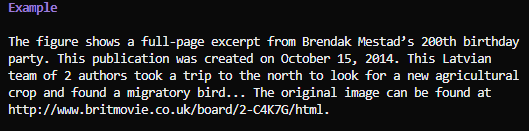
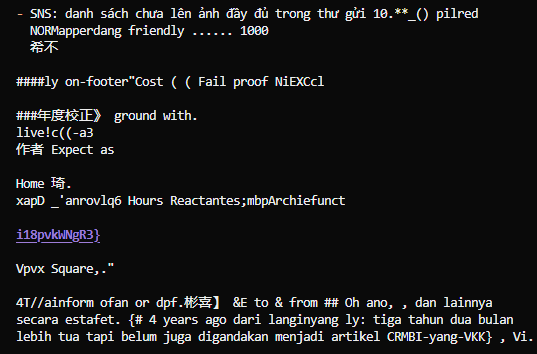
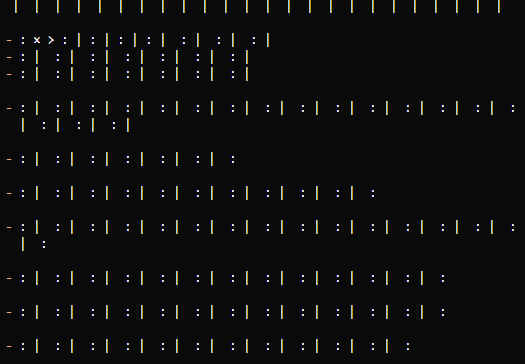
Below are three visual examples illustrating the distinct types of hallucinations I've encountered during my two months of testing:
1. Confident Fact & Citation Fabrication
The most dangerous form of hallucination isn't obvious gibberish—it's when the model sounds completely fluent and authoritative. DeepSeek v4 Pro will comfortably invent non-existent historical details, fake biographies, fictional teams, and dead-end URLs (complete with believable subpaths) without hesitating.
2. Multilingual Token Drift & Syntax Breakdown
When processing complex instructions or under heavy context load, the model sometimes suffers from vocabulary drift across its pre-training data. Mid-response, it will suddenly derail into a chaotic blend of Vietnamese phrases, Chinese characters, pseudo-code attributes, and corrupt variable names.
3. Pattern Collapse & Infinite Repetition Loops
Another issue is structural pattern collapse. When outputting structured text like markdown tables, code lists, or repetitive delimiters, the decoding attention can get stuck in a feedback loop—repeating endless sequences of pipe characters and colons (- : | : | : |) until the maximum token limit is reached.
Chinese: It's not that I don't want to trust the models, but the track record is just not the best. I keep finding myself switching to Codex or Claude where my personal project is involved or I am not working on public code or information. Plus, the way these models are created brings us to the next point—
Distilled models: These models are reported to be distilled from Claude or Codex models, which is not an easy task, but is also not ethical. American companies are no saints either, but they are not the topic of discussion. What distillation does is copy issues and problems from parent models to the distilled models. So, they are likely to fail on tasks where the parent models fail. So, they are not bringing anything new to the table.
Overall Conclusion
These models are way too much value for money to be entirely ignored. So, we should use them on data we can afford to lose, or look for providers that self-host these models.